First (Scots) Presbyterian Church is a beautiful building. As I entered, I was taken aback with the stained-glass windows that surrounded the first and second floors of the sanctuary. With each of these weekly church visits, I am filled with curiosity about the people who have sat in these pews before me. When you enter the sanctuary and take time to read the marble plaques, it tells you a quick synopsis of the early members of the church, a dedication of why this window was earmarked for them and lastly—as a member shared with me—most are buried out back in a cemetery adjacent to the church. It makes you pause and think: is there room for today’s church members? At what point will we transition to honoring or celebrating members of our current day instead of the founding fathers of our past?
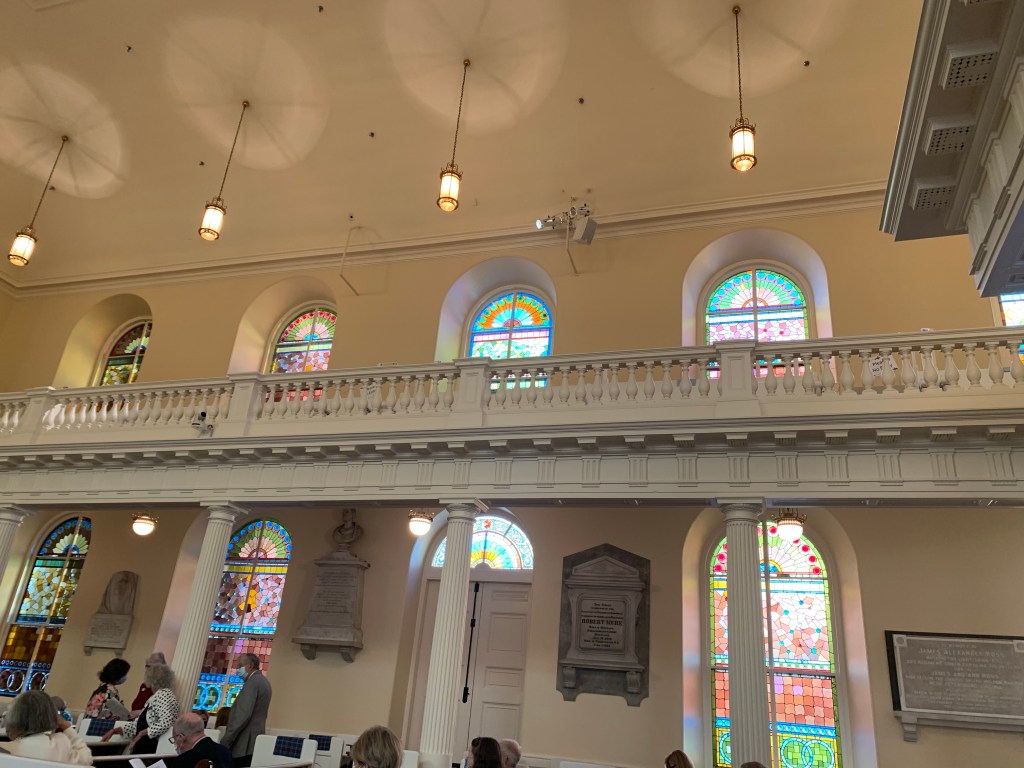
This particular Presbyterian Church was founded in 1731, when a few of the Scottish members left the Independent Church of Charles Towne to form this congregation. The Scottish influence is still felt today, as a member wearing a Scottish kilt brought the bible (or a book of some sort; I actually don’t know what it was) up to the altar during the opening processional. The acoustics of this sanctuary were also stunning. The traditional church service fan in me enjoyed having the hymns printed with the accompanying music in our bulletins and hearing the congregation sing along with the hymns. It’s hard with the masks – let’s just face it – but despite the masks, this was the loudest group I’ve heard so far.


Prior to converting to United Methodist as a youth, my sister and I were raised Presbyterian, and the fundamentals of the service were as I remember them so many years ago. The little holes for the communion cups – I had many a fun time tossing wadded pieces of bulletin paper in those as a kid (kind of wanted to do that today but I resisted – ha!); the flow of the service and for the most part, the readings, baptism and children’s sermon were similar. The exception to this was the Call for the Confession. I don’t recall this at all growing up in Methodist or Presbyterian churches. I’ve noticed this is a big deal in most of the churches I’ve been too so far on this Charleston journey. There is a silent call for confessions and then a group reading aloud where we verbally say we’ve “failed to serve God faithfully.”

The guilt aspect expected from so many religions I just don’t get. I subscribe to the belief that we’re all humans, we make mistakes, we can apologize and forgive and move on. I guess this is a form of confession, but the ritual and public shaming aspect just feels forced to me.
The sermon today was “Wisdom of God.” It didn’t leave a positive or negative impression on me. The gist was you are saved by the grace of faith not necessarily by “doing.” People expect God to act a certain way, yet his acts are never going to be logical. We, as a modern society, tend to think and see things through logic and that challenges our faith and the “wisdom of God.”
Communion was handled via plastic cups at the beginning of the service. I did not participate, so I didn’t see how they handed the bread/body, and I didn’t see anyone else with any bread.
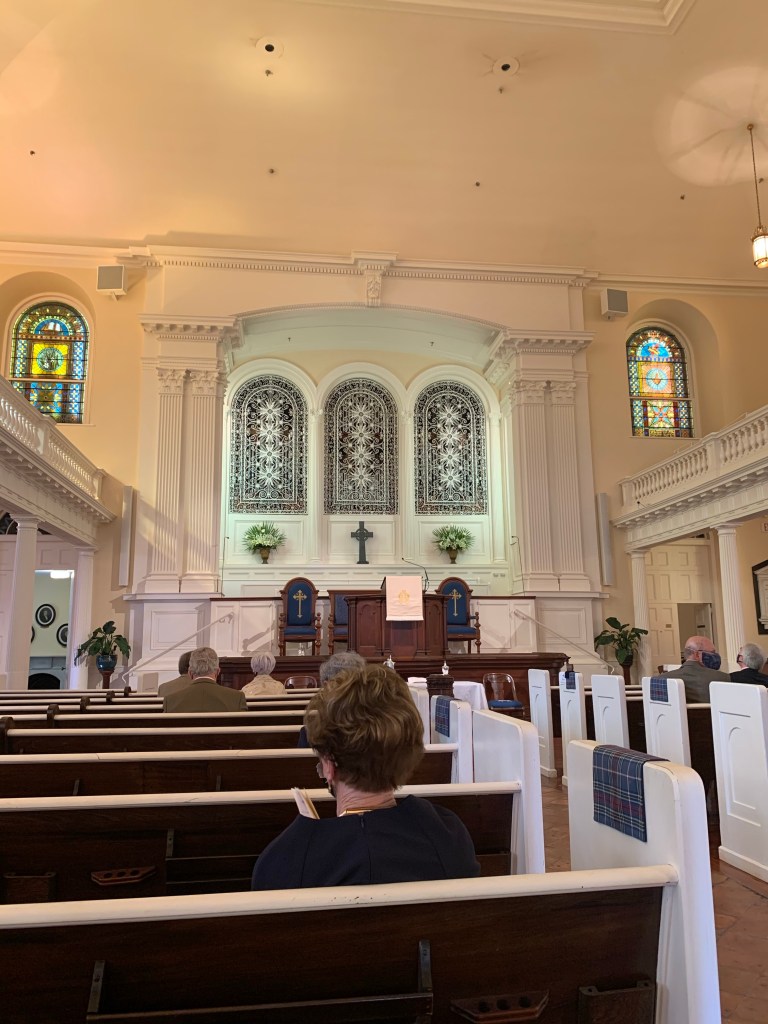
The only other note I’ll mention is that I felt the service had an awkward “Passing of the Peace” open at the beginning of the service. Multiple people wanted to know why I was there and if I was visiting Charleston. The pews were open, so in this moment of sharing, I missed the security of my locked pew box. Maybe next Sunday.
Fun Facts:
Congregation formed 1731
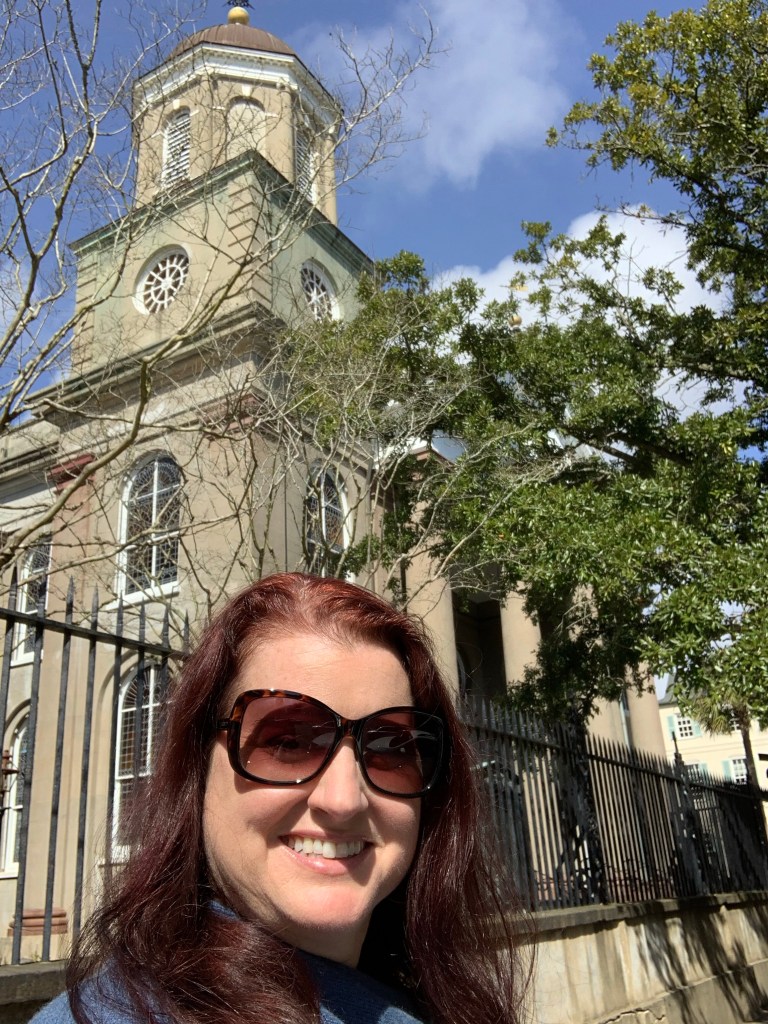
Building built in 1813 with the Scottish seal over the entryway
Damaged in the 1886 earthquake
Original Church Bells were donated to the Confederate Army, replaced in 1999 with bells made in the 1800s from a church in England.
 52 Houses of Worship in 52 Weeks Across the Holy City, Charleston SC